
Posted By admin
 Apr 06, 2026
 06:39:15am
 In Singapore’s highly regulated facility management landscape, staying ahead requires more than just operational efficiency—it demands compliance, visibility, and smart automation. CAFM Software in Singapore is transforming how FM teams manage assets, maintenance, and service delivery, enabling more streamlined and data-driven operations.
With real estate and infrastructure playing a critical role in Singapore’s economy, and regulations from the Building and Construction Authority, National Environment Agency, and Workplace Safety and Health (WSH) frameworks shaping daily operations, the need for advanced digital solutions is growing rapidly. Solutions like Property-xRM the best building management software in Singapore are helping organizations ensure compliance while improving efficiency.
In this blog, we explore how Property-xRM CAFM Software empowers businesses to manage facilities more effectively—enhancing asset visibility, simplifying maintenance workflows, and supporting smarter decision-making for a future-ready built environment.
Facility management companies in Singapore face unique challenges in maintaining and optimizing diverse facilities, from commercial buildings to residential developments and industrial sites. This includes soft services like cleaning and security, as well as hard services such as HVAC and fire protection systems.
Beyond daily operations, FM teams must navigate strict compliance requirements, manpower constraints, and high service expectations in a dense urban environment. From meeting inspection standards set by the Building and Construction Authority to managing contractor coordination across multiple sites, even small inefficiencies can lead to delays, penalties, or service disruptions.
Traditional methods of manual record-keeping and coordination are time-consuming and prone to errors—especially as operations scale. This is where Property-xRM the best CAFM Software in Singapore comes in, offering a tailored solution to address these challenges. Still wondering why choose CAFM software? Read on to find out.
Property-xRM is a powerful CAFM software powered by Microsoft Dynamics 365 Field Service. The solution combines the best of both worlds – the latest Microsoft Technology and expertise in the facilities management domain. With over 20 years of best practice in Real Estate and FM Operations, Property-xRM puts together key functionalities for Singapore Building Management Operations.
Within Facilities Management, Property-xRM covers 2 main maintenance processes:
Reactive maintenance involves addressing sudden issues and breakdowns as they occur. It is to ensure that the facilities are running smoothly. Often referred to as ‘breakdown maintenance’ or ‘run-to-failure’, such maintenance involves addressing unexpected equipment failures, malfunctions, or damages.
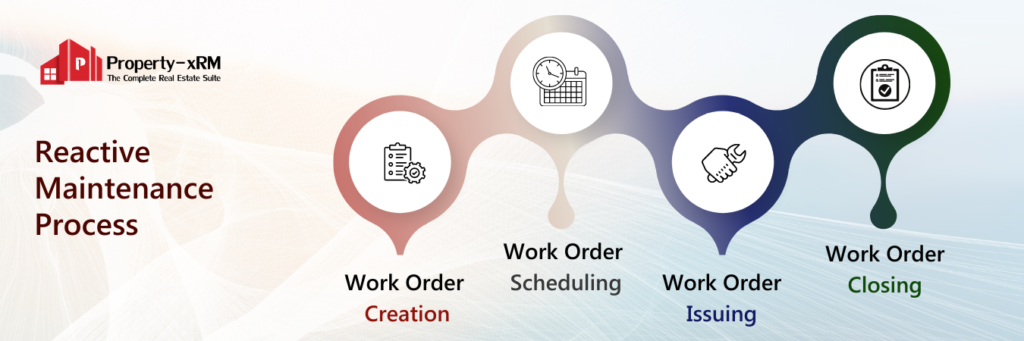
Since reactive maintenance is all about resolving the issue or requests at hand, Property-xRM ensures end-to-end work order management.
Preventive Maintenance takes a strategic approach that goes beyond fixing what’s broken and instead focuses on keeping things running smoothly in the first place. By identifying and addressing issues periodically, preventive maintenance helps maintain optimal facility performance.
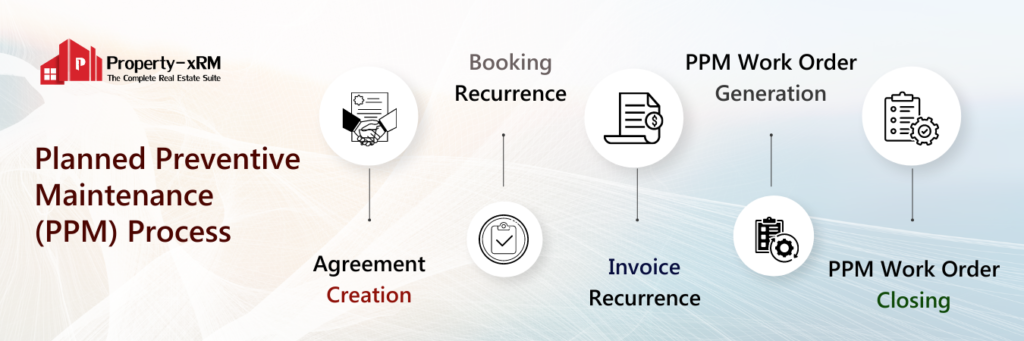
Planned Preventive Maintenances usually involve third-party contractors who undertake periodic inspections and resolutions. Property-xRM covers all processes right from creating a PPM Agreement until resolution.
Maintenance Management plays a critical role in FM operations, and Property-xRM offers a powerful solution to streamline daily operations.
Facility Management Software streamlines work order creation, assignment, and tracking. Technicians receive real-time updates, ensuring swift response to maintenance requests and minimizing downtime.
Property-xRM provides online portals that consolidate all facility-related information, enabling FM Companies to access critical data with ease. The portal serves as a one-stop solution, eliminating the need for cumbersome paperwork and manual record-keeping. This centralized approach streamlines operations, enhances communication, and empowers better decision-making.

Facility Management software like Property-xRM offers portals for clients, tenants, as well as third-party service providers. Some of the main capabilities include:
With the diverse range of assets across Singapore’s facilities, tracking and managing them can be challenging. Property-xRM CAFM Software in Singapore provides a centralized asset database with maintenance history and warranty information, helping ensure optimal performance and cost efficiency while supporting compliance with standards set by the Building and Construction Authority.
Facility Management Software helps in allocating resources effectively, assigning tasks to the right technicians based on skills and proximity. This maximizes workforce productivity and ensures timely service delivery.

Happy occupants and tenants are essential for facility success. The online portals help manage tenant requests, track service delivery and improve overall customer satisfaction. They can raise their requests, view associated invoices, chat with representatives, and much more using the portal.
Property-xRM leverages Dynamics 365 reporting engine as well as native Power BI capabilities to provide actionable insights through real-time analytics. Data-driven decision-making enables continuous improvement and strategic planning for facility managers.
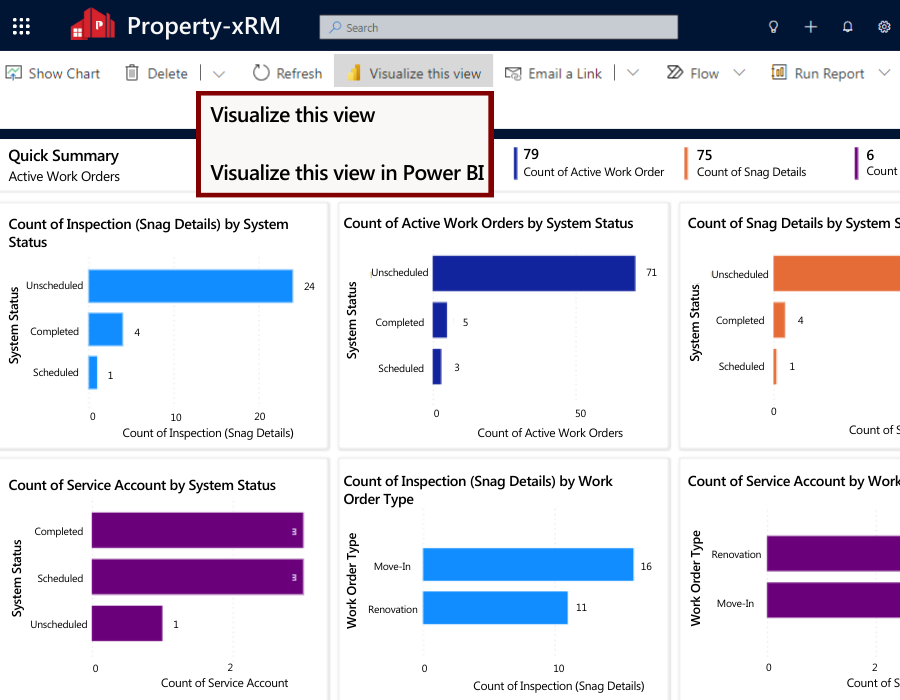
Selecting the ideal Building Management Software in Singapore is a critical decision. Look for a solution that offers a user-friendly interface, customizable features, robust support, and scalability to accommodate your facility’s growth.
Computer-Aided Facilities Management (CAFM) Software in Singapore enables FM teams to digitally plan, monitor, and control facility operations through a centralized system. Especially for the Singapore market, where compliance, operational precision, and multi-site coordination are critical, Property-xRM acts as the CAFM layer—connecting asset data, maintenance schedules, space utilization, and work orders to provide complete visibility and control. This structured approach reduces manual coordination, improves response times, and supports compliance with standards set by the Building and Construction Authority, enabling more efficient and data-driven facility management.