

Posted By admin
 Oct 09, 2024
 12:39:03pm
 For real estate developers and firms, managing a network of brokers is essential to driving sales. Brokers play a key role in engaging with potential buyers, but developers must have full visibility into these interactions. Tracking brokers, deal progress, and commission payouts can be challenging without the right organizational tools.
This blog discusses broker onboarding challenges, the benefits of management software, and how Property-xRM’s Broker Portal can help.
The onboarding process for brokers can be lengthy and complicated, especially when relying on outdated manual systems. Here are some common pain points developers face:
Managing broker relationships across multiple projects shouldn’t mean juggling spreadsheets, expired licenses, and commission disputes.
See how Property-xRM’s Broker Portal handles onboarding, compliance tracking, and commission pay-outs in one system, and what it would take to bring your broker network onto it.

Real estate broker management software offers solutions to many of these challenges by automating processes, improving communication, and ensuring compliance. Let’s examine the main benefits.
a) Automated Onboarding Workflows: Software automates key onboarding steps, including registration, document submission, approvals, and agreement generation. Brokers can upload documents directly into the system, eliminating the need to chase approvals and triggering automated workflows. This reduces the time and effort involved in onboarding.
b) Centralized Agent Information: Broker management software centralizes all broker data, making it easily accessible for brokers and developers. Brokers store and monitor their licensing, certifications, and documents like trade licenses and agency contracts for expiration, ensuring they remain current.
c) Simplified Paperwork: The days of piles of paperwork are over. The software generates agreements, manages signatures, and tracks the status of submitted documents. For example, developers can electronically sign agreements, while brokers can easily update or renew their documents when required.
a) Enhanced Communication Channels: With real estate broker management software, all parties can communicate through a single platform. Brokers and developers can use the portal to submit inquiries, receive real-time updates, and track requests, creating a seamless experience.
b) Real-Time Updates: The system provides brokers with real-time updates on available units, agreements, and compliance statuses. When the system approves a unit release request, it instantly notifies the broker, reducing delays in securing properties for buyers.
c) Document Sharing: Brokers can easily upload and access important documents, like compliance forms and agreements, directly through the portal. This eliminates the need for physical document exchanges, making the entire process more efficient.
a) Compliance Tracking: The software tracks key compliance information, including license expiry dates and contract statuses. Property-xRM, for example, can automatically send reminder emails when a broker’s trade license is about to expire, ensuring timely renewals.
b) Regulatory Updates: Brokers and developers receive regular updates to stay compliant with current real estate laws and industry standards. This not only minimizes risk but also protects all stakeholders from potential legal issues.
c) Audit Trails: With built-in audit trails, the software allows developers to track every action taken by brokers. When a broker uploads a document or updates their profile, the system records a timestamp and the user’s identity to ensure accountability.
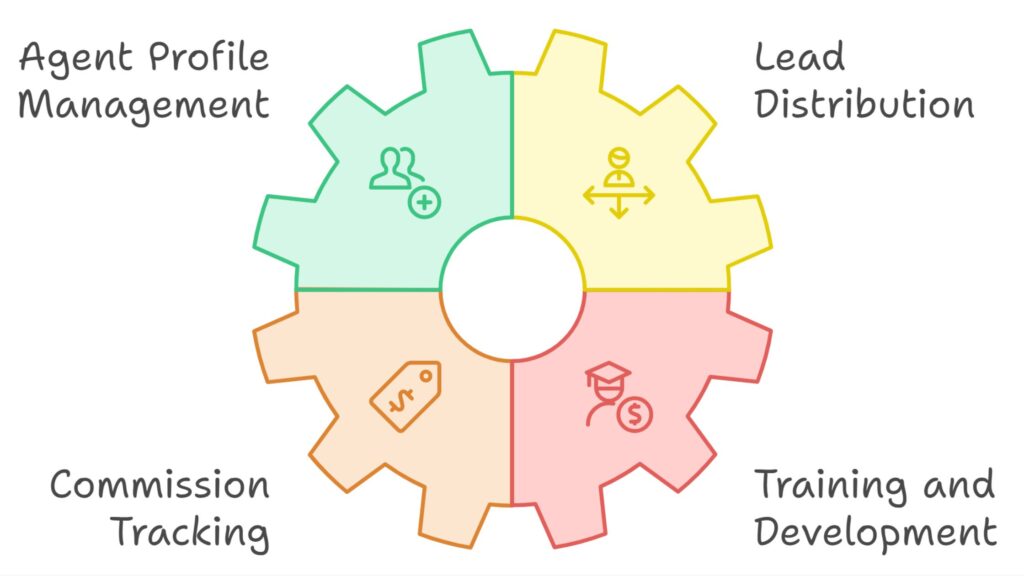
1) Agent Profile Management: With centralized information, brokers can easily update profiles and track key details like licensing, certifications, and performance metrics. Developers can manage approvals for broker updates and monitor their ongoing activity, ensuring compliance and optimal performance.
2) Lead Distribution: Automated lead assignment directs brokers to the right opportunities based on their skills and availability, ensuring they can focus on leads that match their expertise. With real-time lead tracking and nurturing capabilities, brokers can manage their leads effectively, improving conversion rates and maintaining high productivity.
3) Commission Tracking: One of the biggest pain points for brokers is commission management. Property-xRM automates commission calculations based on unit sales, providing clear pay-out dates and facilitating payment tracking for brokers. Developers can also access commission reporting to monitor broker performance and payouts.
4) Training and Development: For brokers, staying updated on market trends and regulations is crucial. Real estate broker management software often includes online training modules or provides a system to track continuing education credits. This ensures brokers remain well-informed and compliant with industry standards.
Property-xRM is a leading real estate broker management software that simplifies onboarding, enhances communication, and streamlines operations for developers. Here’s how Property-xRM stands out:
By adopting comprehensive real estate broker management software like Property-xRM, developers can streamline onboarding, improve broker communication, and ensure compliance across all their projects. Investing in the right software not only increases operational efficiency but also boosts broker productivity and satisfaction, ultimately contributing to your business’s growth.
Related Reading : https://propertyxrm.com/9-features-of-real-estate-broker-management-solution/
Is commission tracking better inside the CRM, or as a separate back-office tool?
Property-xRM keeps commission tracking inside the same CRM where deals, units, and broker profiles already live, so pay-out amounts and deal records never drift apart. Commissions calculate automatically from confirmed unit sales, removing the reconciliation step that separate back-office tools require.
How are commissions calculated when real estate deals pay out in stages instead of all at once?
Property-xRM ties commission calculations to each stage of a deal, booking, agreement, registration, and possession, so partial pay-outs match the milestone that triggered them. Brokers and developers both see exactly what has been paid and what remains pending, without reconstructing the timeline manually.
What happens when a broker’s commission split changes mid-deal, or a co-broker is involved?
Property-xRM applies commission rules automatically, even when a deal involves splits or multiple brokers, so the calculation does not depend on someone remembering to update a formula. This is the exact scenario where spreadsheet-based tracking tends to break down.
Why do spreadsheets fail for commission tracking specifically, not just onboarding?
Commission errors carry a direct financial cost, unlike a missed onboarding step, which is why Property-xRM automates the calculation itself rather than just digitizing the paperwork around it. Manual entry and formula errors compound across dozens of brokers and deals; automated commission rules remove that risk at the source.
Can brokers see their own pay-out status without contacting the developer’s finance team?
Yes. Property-xRM gives brokers direct visibility into pay-out status through the portal, removing the back-and-forth email chains that build up around commission questions and freeing finance teams from fielding routine status requests.
Does the software handle license and contract compliance automatically, or does someone still have to track expiry dates manually?
Property-xRM sends automated alerts ahead of license expirations and contract renewals, replacing manual calendar-tracking. Developers and brokers both get advance notice instead of discovering a lapse during an audit or a deal.
Is there a way to prove what happened if a broker disputes a commission amount or a deal detail?
Property-xRM logs every document upload, profile change, and status update with a timestamp and user identity, giving developers an audit trail to resolve disputes from the record itself rather than conflicting recollections.
What is the difference between Property-xRM’s Broker Portal and general real estate onboarding software?
General onboarding software (built for agents joining a brokerage) manages HR-style onboarding: contracts, training, MLS paperwork. Property-xRM’s Broker Portal is built for developers managing an external broker network across projects, centered on unit availability, commission pay-outs, and compliance tracking rather than internal HR workflows. Developers evaluating broker tools should match the tool to which relationship it manages.