

Posted By admin
 Aug 08, 2023
 01:10:29pm
 In the fast-paced world of real estate, managing a complex pipeline of properties, clients, and transactions can often feel like navigating through chaos. However, with Property-xRM, professionals have access to powerful tools that streamline and simplify the management of their real estate sales pipeline. Here, we will explore how Property-xRM can transform the life of real estate professionals and enables them to handle their daily operations more efficiently. Thereby, bringing order to the chaos.
One of the key benefits of Property-xRM is its ability to centralize and manage vast amounts of data in a single, unified system. Gone are the days of sifting through scattered spreadsheets, emails, and paper files. With Property-xRM, real estate professionals can store all property-related information, such as property details, client preferences, transaction histories, and documents, in one secure database.
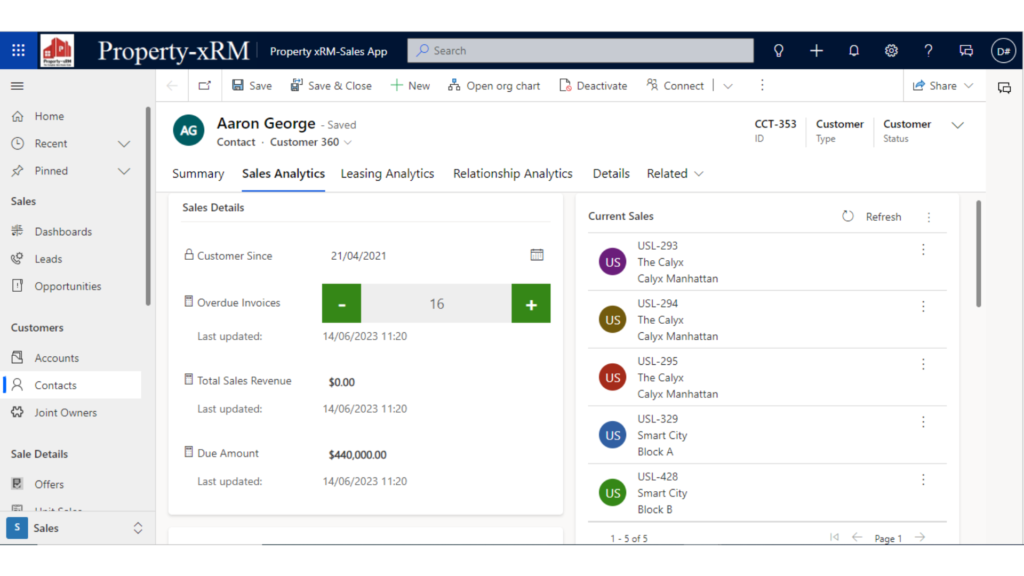
With access to real-time inventory, agents can shortlist the right units based on customer preferences and proceed with the next steps. A customer 360-degree view helps to access information like historic records, and the latest activities giving insights into the relationship health with a customer. This centralized approach saves time and ensures data accuracy and accessibility, enabling agents to make more informed decisions to drive the real estate sales pipeline.
Property-xRM offers robust lead management capabilities that help real estate professionals efficiently track and nurture potential leads throughout the sales cycle. By automating lead capture, qualification, and assignment, Property-xRM ensures that nothing falls through the cracks. The latest in AI and Microsoft Sales CoPilot empowers front-end teams to get rich insights and drive interactions in the best possible way.
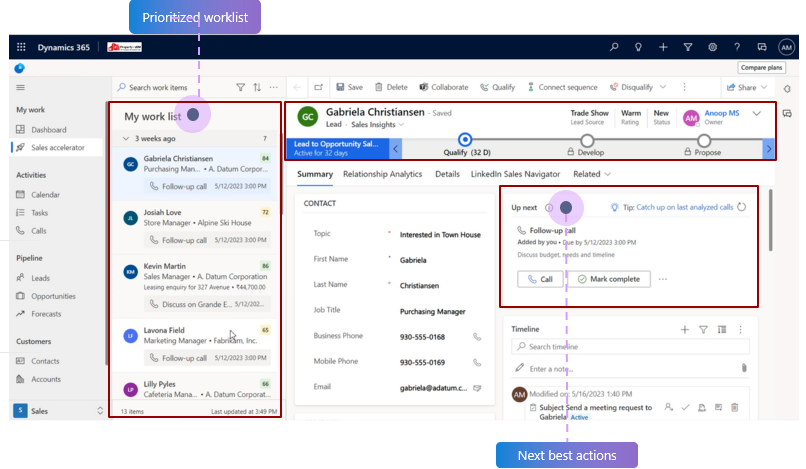
Intelligent AI-powered lead-scoring algorithms can prioritize high-quality leads, enabling agents to focus on the most promising opportunities. Furthermore, the native connectivity with Microsoft collaboration Apps like Teams and Outlook allows for seamless interaction with leads, improving response times, and customer satisfaction.
Effective collaboration, communication, and document management are vital in the real estate industry. Property-xRM provides a centralized platform that promotes collaboration among team members, allowing for efficient sharing of information, tasks, and updates. Real estate agents can assign tasks, set reminders, and track progress, ensuring everyone is on the same page. Not just that, team members can even share reports and dashboards, with necessary permissions and access controls to communicate better.

Additionally, Property-xRM offers integrations with various third-party communication channels, such as Call Centers (CTI) or WhatsApp (Instant messaging), DocuSign, etc. enabling real-time communication and eliminating the need for back-and-forth emails. Single and Multi-level approvals are made easier using in-app notifications and Teams Collaboration.
The automation capabilities of Microsoft Dynamics 365 and Property-xRM can significantly streamline repetitive tasks and processes, saving time and reducing errors. Real estate business professionals can create customized workflows that automate routine activities across a customer journey.
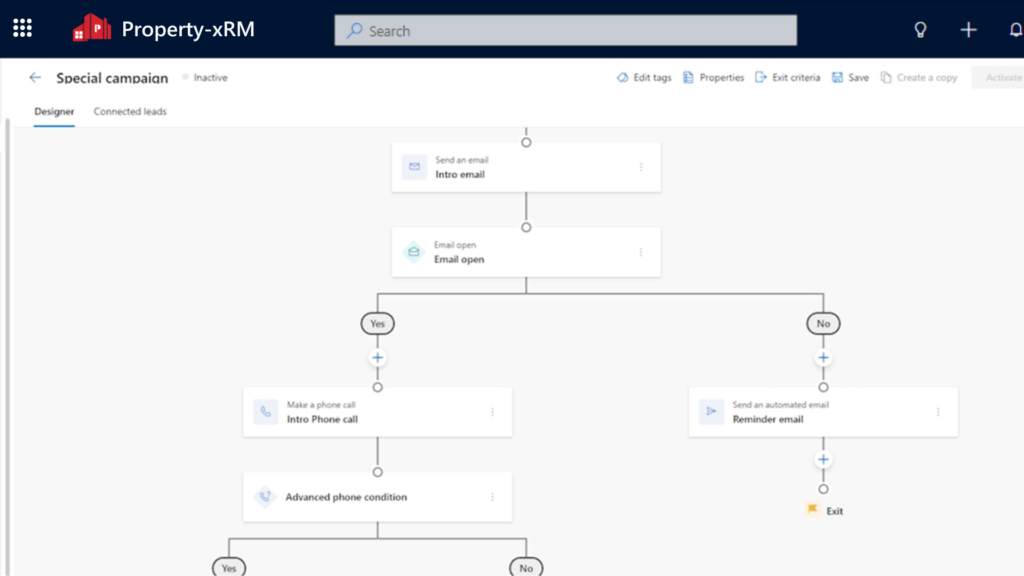
This phase goes hand-in-hand with marketing automation which helps in defining a general flow of events once an interaction is established with a prospective resident. Different lead sources may require different ways of reaching out, and Property-xRM allows users to build custom workflows for different processes. This includes sharing property listings with clients, making phone calls, or scheduling follow-up tasks. These automated processes ensure consistency and efficiency, freeing up valuable time for agents to focus on building relationships and closing deals.
Property-xRM empowers real estate professionals with powerful analytics and reporting tools that they can customize themselves. By leveraging data stored in the system, agents can gain valuable insights into their real estate sales pipeline performance, client behavior, market trends, and more.
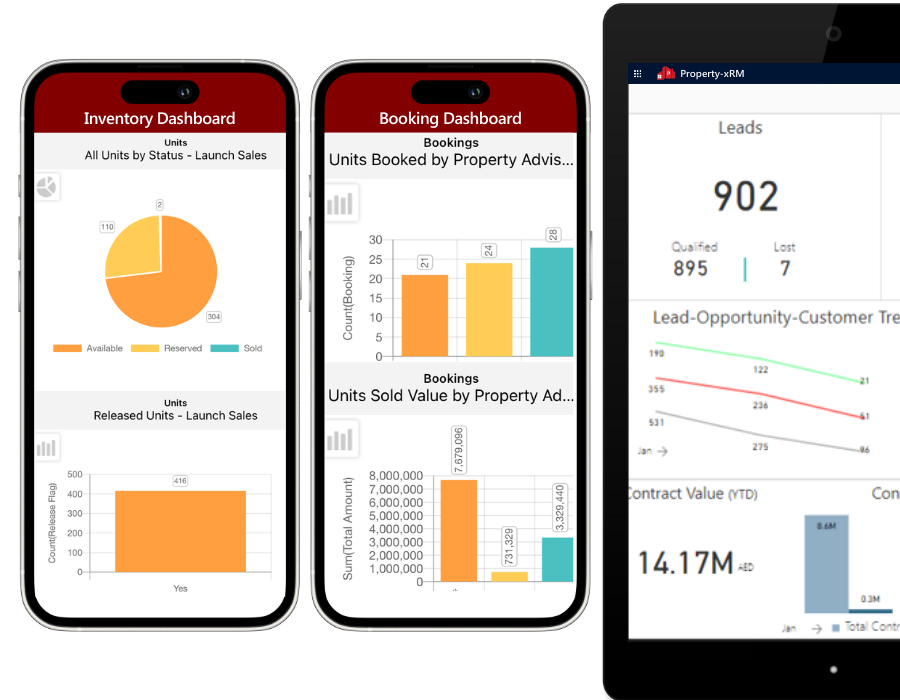
Visualizations and Dashboards provide a clear overview of key metrics, facilitating data-driven decision-making. Armed with this information, real estate professionals can identify areas for improvement, refine their strategies, and ultimately drive better results. Insights into lead channels, sources, conversions, forecasted closures, predicted outcomes, projected revenues, and stage-wise customer journey – all empower the front-end executives.
The real estate industry is no stranger to chaos and complexity. However, Property-xRM Real Estate CRM solutions offer a powerful antidote to these challenges. By centralizing data, streamlining lead management, promoting collaboration, automating workflows, and providing robust analytics, Property-xRM simplifies real estate pipeline management, transforming chaos into organization.
Real Estate Developers and Homebuilders who embrace these technologies can gain a competitive edge, increase efficiency, and provide exceptional service to their clients. As the industry continues to evolve, Property-xRM will undoubtedly play a crucial role in shaping the future of real estate operations.
1. What is a real estate sales pipeline?
A real estate sales pipeline is the sequence of stages a prospect moves through, from first inquiry to closed deal. It typically includes stages like new lead, contacted, site visit or showing, negotiation, and closing. Property-xRM lets you customize these stages to match how your team actually sells.
2. What are the typical stages of a real estate sales pipeline?
Most teams use some version of: lead capture, qualification, engagement/nurturing, site visit or showing, negotiation, and closing, followed by post-sale follow-up. Property-xRM allows each of these stages to be configured and tracked visually, with automated actions triggered as a lead moves forward.
3. How does a CRM actually help manage a real estate pipeline (versus spreadsheets)?
A CRM centralizes lead and property data in one place, tracks where every prospect stands, and reminds agents when follow-up is due, which spreadsheets can’t do at scale. Property-xRM combines property inventory, customer history, and communication logs so nothing needs to be pieced together manually.
4. How do I stop leads from falling through the cracks?
The most common cause is inconsistent follow-up, not a lack of leads. Property-xRM automates lead capture and assignment and uses AI-based lead scoring (via Microsoft Sales Copilot) so high-priority prospects are flagged and routed to the right agent instead of sitting untouched.
5. What’s the difference between lead management and pipeline management?
Lead management is about capturing and qualifying prospects; pipeline management is about tracking qualified deals through to close. A real estate business needs both, since strong lead management without pipeline discipline means leads come in but don’t convert, and vice versa. Property-xRM handles both in a single system rather than requiring separate tools.
6. What features should I look for in a real estate CRM?
Common criteria include: whether it’s built for real estate specifically (versus a generic CRM requiring heavy customization), native integrations with tools your team already uses, customizable pipeline stages, automation for repetitive tasks, and built-in reporting. Property-xRM is purpose-built on Dynamics 365 for real estate, with native Teams, Outlook, WhatsApp, and DocuSign integrations.
7. Can a CRM predict which deals are likely to close?
Yes, this is typically done through forecasting based on pipeline stage, lead scoring, and historical conversion data. Property-xRM’s analytics dashboards surface forecasted closures and predicted outcomes so managers aren’t relying on verbal updates from agents.
8. How does automation improve a real estate sales pipeline?
Automation removes manual, repetitive work such as sending listings, scheduling follow-ups, or triggering nurture sequences when a lead enters a new stage. In Property-xRM, workflows can be built per lead source, since a portal lead and a referral often need different follow-up sequences.
9. Why is pipeline visibility important for sales managers, not just agents?
Without visibility, a manager can’t tell which leads are stalling or which rep needs support without asking each person individually. Property-xRM’s dashboards give managers a real-time view of where every deal sits, so bottlenecks can be caught before a lead goes cold.
10. Is a real estate-specific CRM actually better than a general-purpose CRM like generic sales software?
Industry-specific CRMs generally require less customization since features like property inventory, unit-level tracking, and real estate transaction stages are built in rather than added on. Property-xRM is designed specifically for real estate developers, leasing firms, and property managers, rather than adapted from a generic sales tool.